When we travel abroad, we go with the mindset that we can’t see it all, but we’d like to see as much as we can.
Once we’ve picked out a destination, I create a Note on my iPhone.
There, I keep track of things we’d like to see and do.
I’ll also make notes of restaurants that I come across and other little tidbits that might be helpful later in the planning process.
Having everything on my Notes app keeps things easy to access and adjust as needed.
I Begin with the Obvious Must-Sees
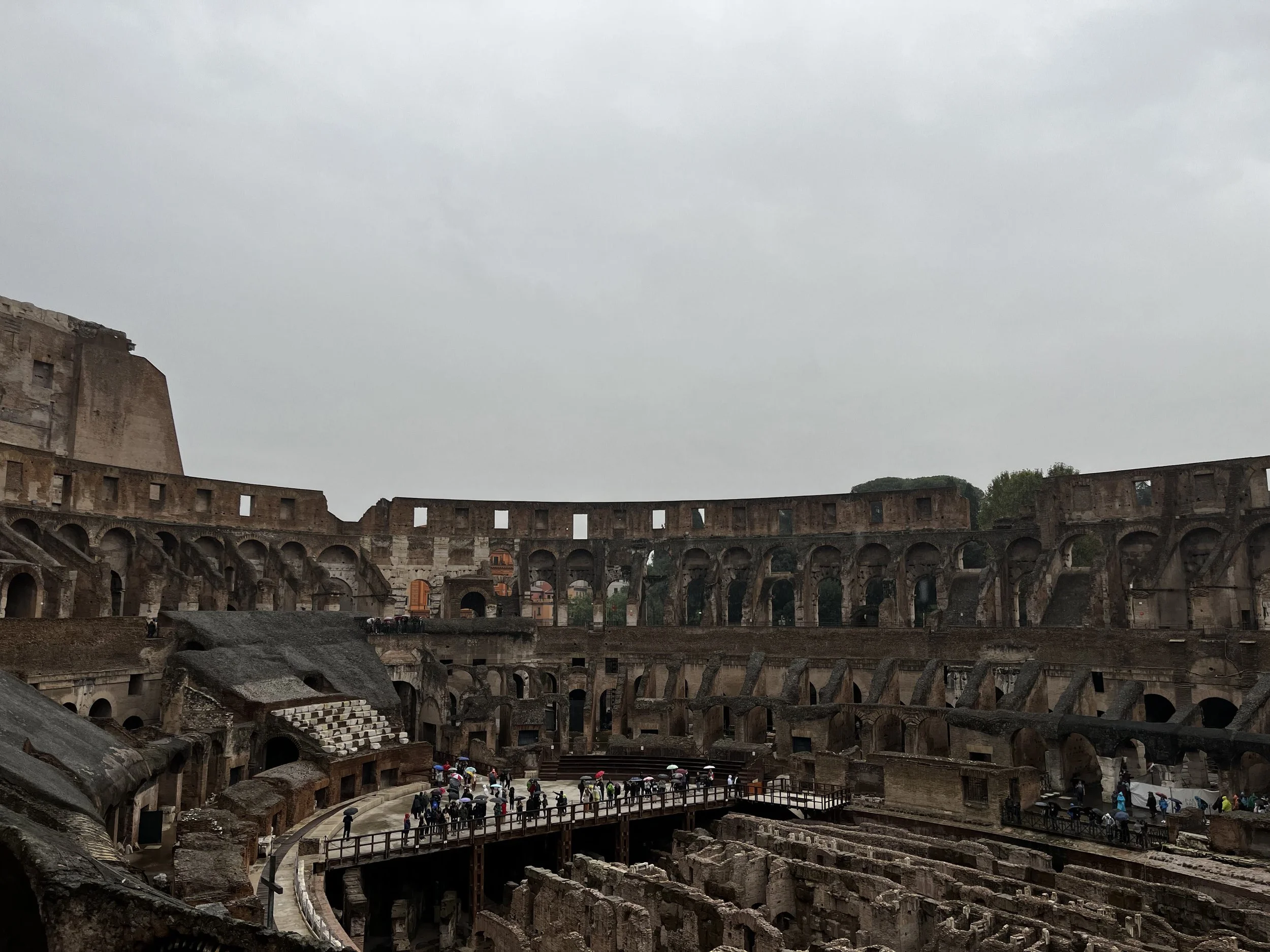
We visited the Colosseum in Rome. Even on a rainy day, it was magnificent.
We wouldn’t go to Paris without seeing the Eiffel Tower or to Rome without seeing the Colosseum.
These are iconic sites, and no trip would feel complete to us without seeing them.
Usually, there are two or three absolute must-sees.
Then, I start looking deeper.
YouTube
We’ll search destinations from our favorite travel YouTubers (Wolters World for straightforward, must-know travel tips and Adventures of Matt and Nat for honest recommendations and seeing what places are really like).
I tend to ignore the more influencer-y type content. Not because it’s not fun to watch sometimes. But when planning a family trip, I need the real, unfiltered advice. Not just the highlight reel.
Travel Guide Books
I’ll do a quick flip through 1,000 Places to See Before You Die to see if there are any iconic sites I’m not familiar with yet.
I’ll also buy a Rick Steves book like this one for recommendations (although I flipped through some of Lonely Planet’s travel guides recently and may use them in the future).
Internet Searches
I also rely heavily on Google.
I’ll Google phrases like “how to spend three days in Paris.” Sometimes I’ll add a qualifier like “with kids” in there, but often it seems like those itineraries are tweaked to cater too heavily to little ones. That’s perfectly fine. However, we want our kids to experience more of the iconic sites. We have multiple zoos a couple of hours from home. If we’re short on time, we don’t want to use up our very limited vacation days in Europe on something like a zoo trip.
Reddit threads are often very helpful, too.
Mapping Out the Sites
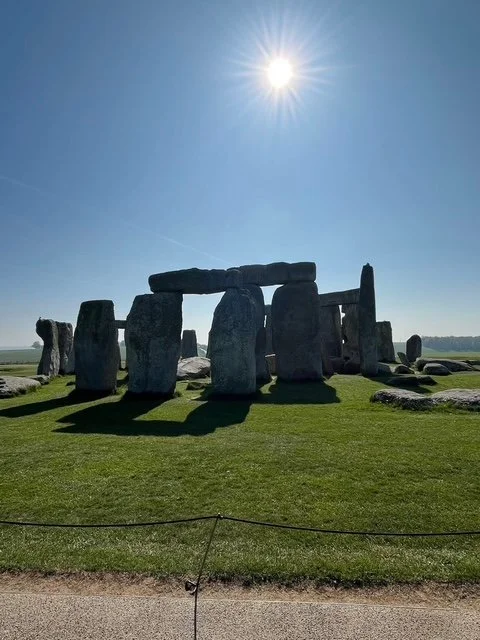
We visited Stonehenge as a day trip when we were in London.
At this point, I start familiarizing myself with the locations of various sites and attractions.
We pick our one absolute must-see for the day and one or two bonus activities (which are chosen based on proximity to the day’s main must-see).
For example, when we took a day trip from London to Stonehenge, we visited the Science Museum afterward because it was very close to the pickup/drop-off location for our tour.
Stonehenge was our “must-do” for the day, and the museum was our bonus attraction. So when the bus dropped us off after our tour, we were minutes away from our next attraction for the day.
Flexibility is Key
When I’m planning out the day, aside from our main attraction, my main goal is to provide options for us so that we’re not scrambling to figure out what to do on the fly (unless we want to wing it).
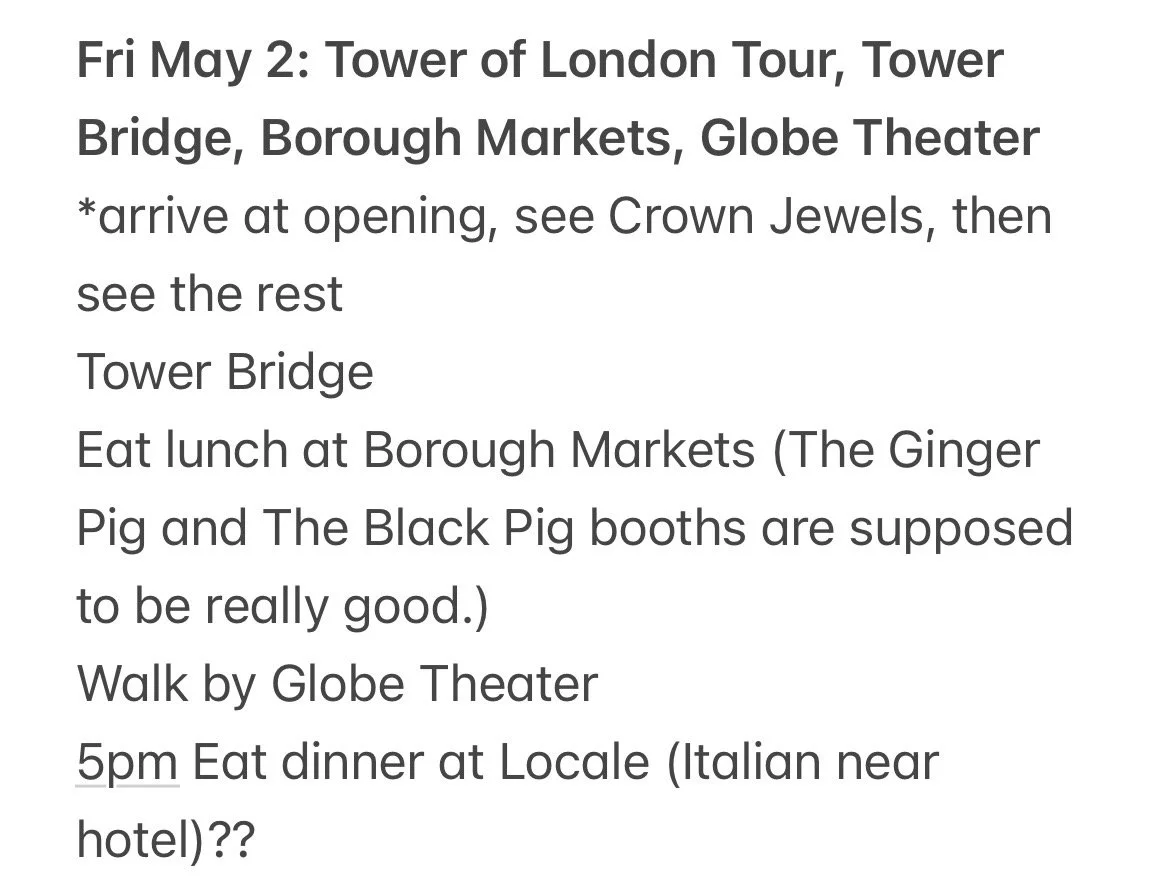
This is a screenshot from our actual London trip itinerary in my Notes app.
Here is a screenshot of my personal itinerary from our trip to London.
On this day, the Tower of London was our absolute must-see attraction.
Afterward, we crossed Tower Bridge and headed toward Borough Market.
When we got there, it was so packed that we got overwhelmed and kept walking toward the Globe Theater, stopping somewhere for a bite to eat on the way.
Because we skipped Borough Market, we had extra time after seeing the Globe, which meant we could pop into the nearby Tate Modern. This led to our youngest making a friend in a play area, which became one of the sweetest, most unexpected memories of the whole trip.
Our Formula for a Full but Manageable Day
Over the years, I’ve learned that trying to cram too many must-see attractions causes unnecessary stress.
So, our strategy is to choose one anchor for the day. That’s the one must-see attraction that will be the most satisfying to us.
Then, we pick one or two additional activities that are nearby, maybe within a 30-minute walk or short metro ride away.
To us, the day is a success even if we are only able to do one thing. The rest is icing on the cake!
Ex: In the London example above, I could have been fine without seeing Borough Market, but the day would have felt like a waste if I hadn’t seen the Tower of London. Everyone’s must-sees are different, too. Maybe you would deeply regret not seeing a performance at the Globe. And if that’s the case, then you’d structure your day with that as the primary focus.
This approach to travel allows us to see a lot without feeling rushed every second of every day.
Rather than trying to see absolutely everything, we incorporate some flexibility, which allows for unexpected detours and surprises.
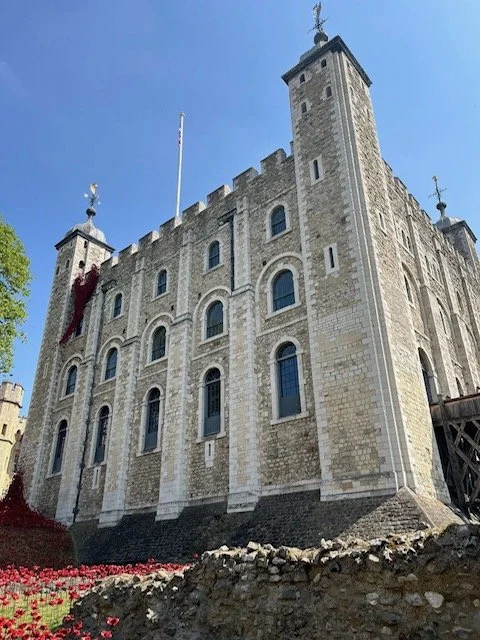
Visiting the Tower of London was a priority for us. To make sure we saw it and could spend as much time there as we liked, we got there first thing in the morning.
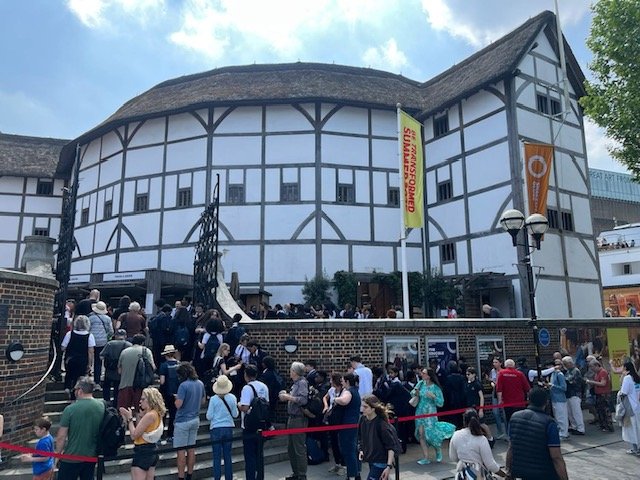
The Globe Theater was another highlight for us. While not our must-see attraction for the day, we were so glad we got to go there. It was definitely icing on the cake of an already great day.
Final Thoughts
As detailed as my itineraries are, my goal when planning our vacation days isn’t to create a schedule down to the minute. It’s to prepare for our travels before we ever leave home so that we can enjoy our trip without stressing over logistics on the fly.
By choosing one main attraction/activity for the day, making note of nearby attractions, and staying flexible, we find that this allows us to enjoy our trip without feeling overwhelmed.