Highlights from our 2–3 hour route through the British Museum
We visited London in May of 2025. Since we were managing two children and limited time, we came up with a route to see the British Museum’s highlights.
Using this route, we arrived at the museum with a 10:10 entry time, walked through much of the route, had a quick lunch there, and were out by early afternoon.
It’s a great route for first-time visitors.
(And if you're planning your first trip to London, you can also read our complete, family-friendly London itinerary.)
Is 2–3 Hours Enough at the British Museum?
Yes. While you won’t see it all, you can enjoy many of the museum’s most famous artifacts in two to three hours if you plan ahead.
The British Museum is one of the most famous museums in the world, and for good reason. It’s filled with notable treasures like the Rosetta Stone and Parthenon sculptures. You could easily spend days exploring all it has to offer.
But most visitors don’t have days.
Often, they only have 2-3 hours.
The route featured in this article covers our family’s must-see highlights that we fit into one morning at the British Museum.
Our 2–3 Hour British Museum Route at a Glance
This route includes:
•Rosetta Stone - Room 4
•Bust of Ramesses the Great - Room 4
•Parthenon Sculptures- Room 18
•Moai - Room 24
•Cyrus Cylinder - Room 52
Time required: 2-3 hours
Best for: First-time visitors
Instead of aimlessly zigzagging throughout the museum, our route starts in Room 4 before heading toward Rooms 18, 24, and 52.
We saw plenty of amazing artifacts wandering between these rooms, but the artifacts listed above were the major highlights.
We spent 2-3 hours seeing these artifacts, including a quick break for lunch.
Before You Start: Tips for Visiting the British Museum
There is no entry fee to view the permanent collection at the British Museum.
However, making reservations in advance is highly recommended. Even with our timed entry ticket at 10:10 a.m. (ten minutes after they opened), the line to get through their security checkpoint was quite long.
If the British Museum is a must-see attraction for you, I highly recommend getting there as close to when they open as possible. This will help you beat some of the crowds and give you more time to explore if you so choose.
The Rosetta Stone (Room 4)
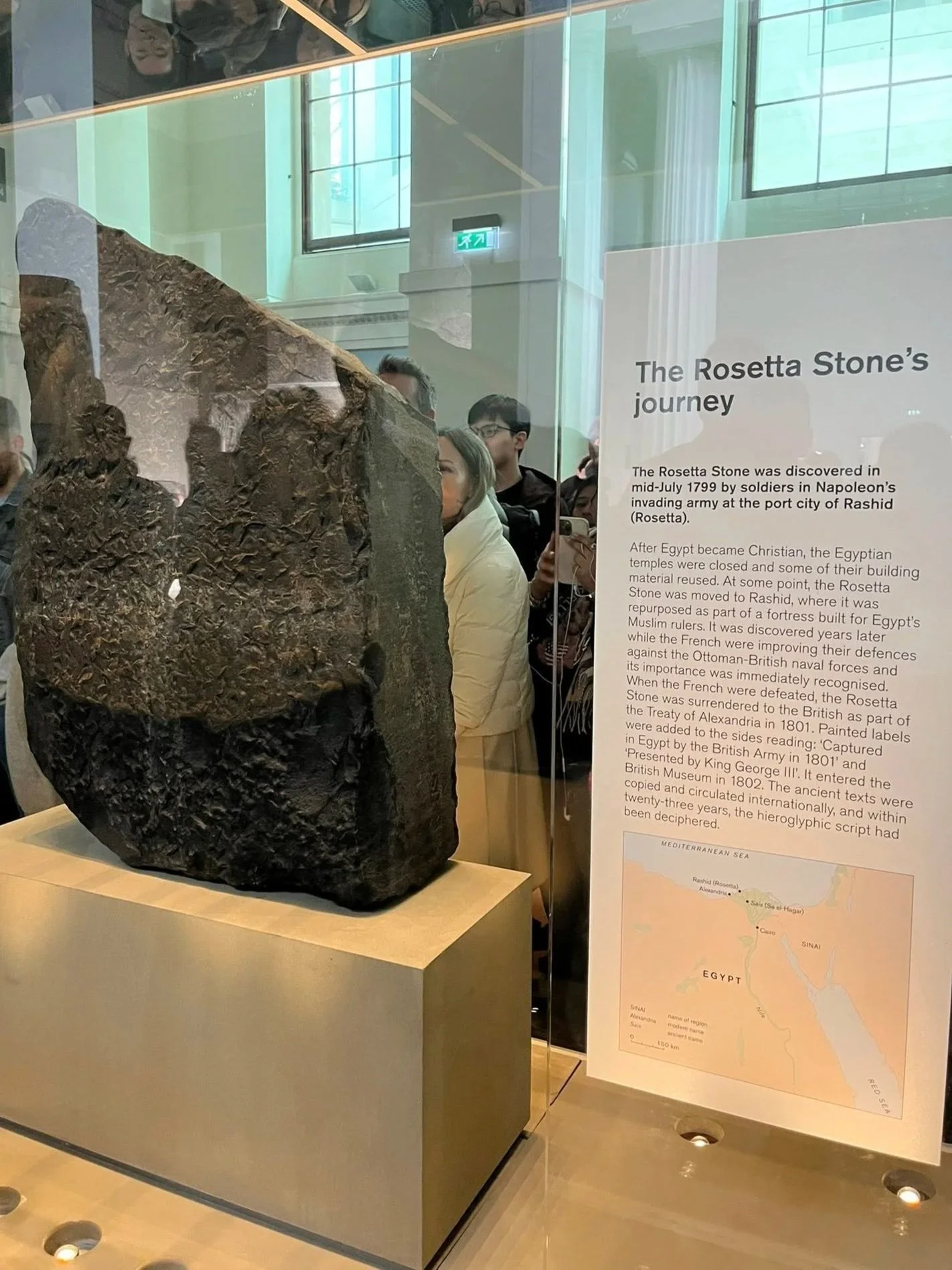
The Rosetta Stone is one of the most famous artifacts in the entire British Museum - with the crowds to prove it.
A trip to the British Museum would be incomplete without seeing the Rosetta Stone.
The stone is famous because it allowed scholars to break the code of ancient hieroglyphics and translate them.
That’s because the same text was written three times in three different scripts, one of them being hieroglyphics.
While I consider it a must-see, don’t expect to get a leisurely, clear look at it. Because of its fame, the area around it is packed. Think Mona Lisa-level crowds.
You can see it. You can get close.
It’ll just require a little patience and perseverance to work your way closer to the glass-encased stone.
Bust of Ramesses II (Room 4)
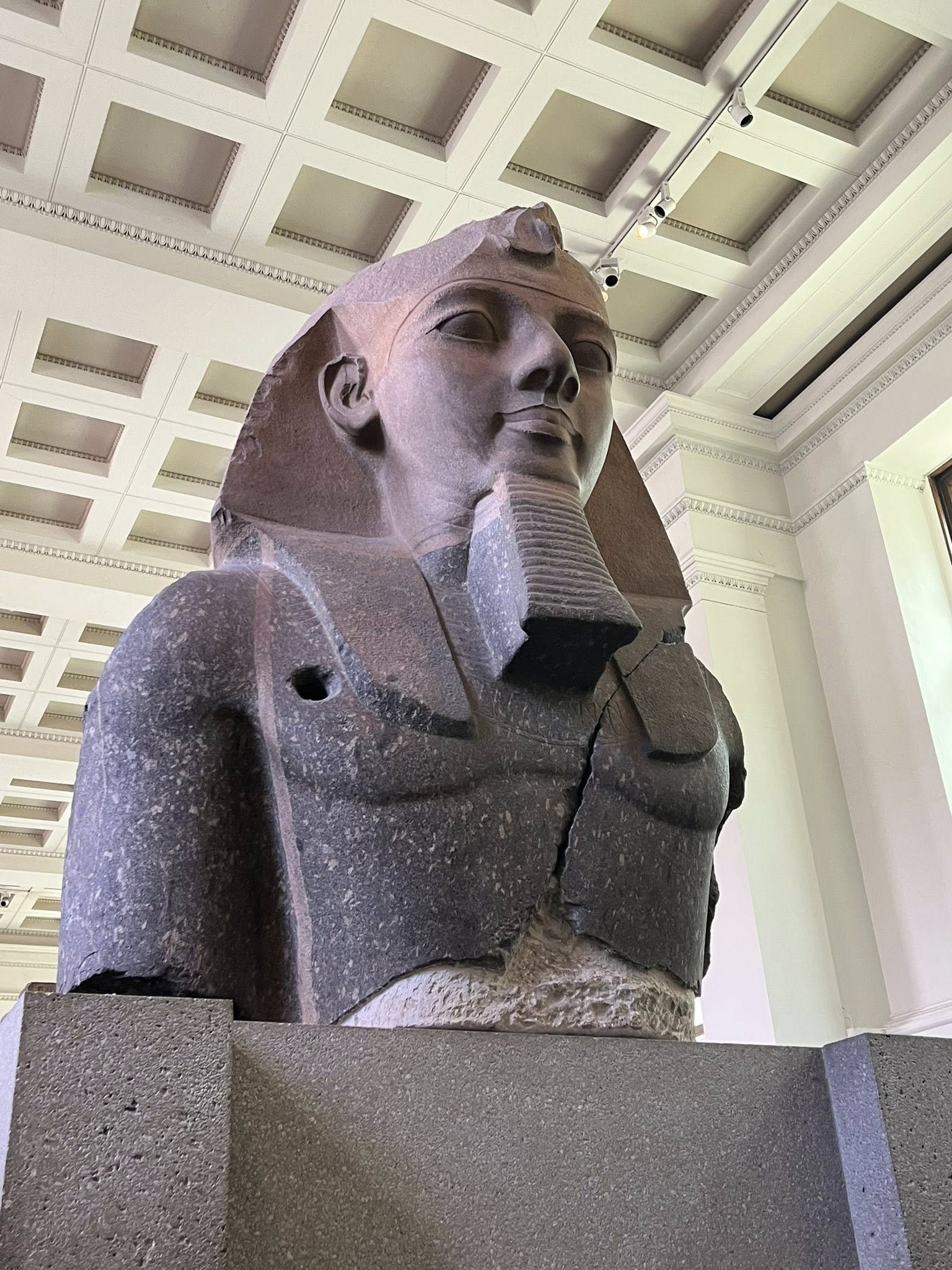
If you’re walking through the Egyptian Galleries in the British Museum, you can’t miss the Bust of Ramesses II. Literally. It’s massive!
As a lover of all things Ancient Egypt, the Bust of Ramesses II was a sight to behold.
As a kid, you read about Ancient Egypt in school and can’t even fathom that you could see actual artifacts from there with your own eyes.
The bust is a massive sculpture that you can’t help but be in awe of. Seeing it tower above the crowds of visitors made quite a lasting impression.
The Parthenon Sculptures (Room 18)
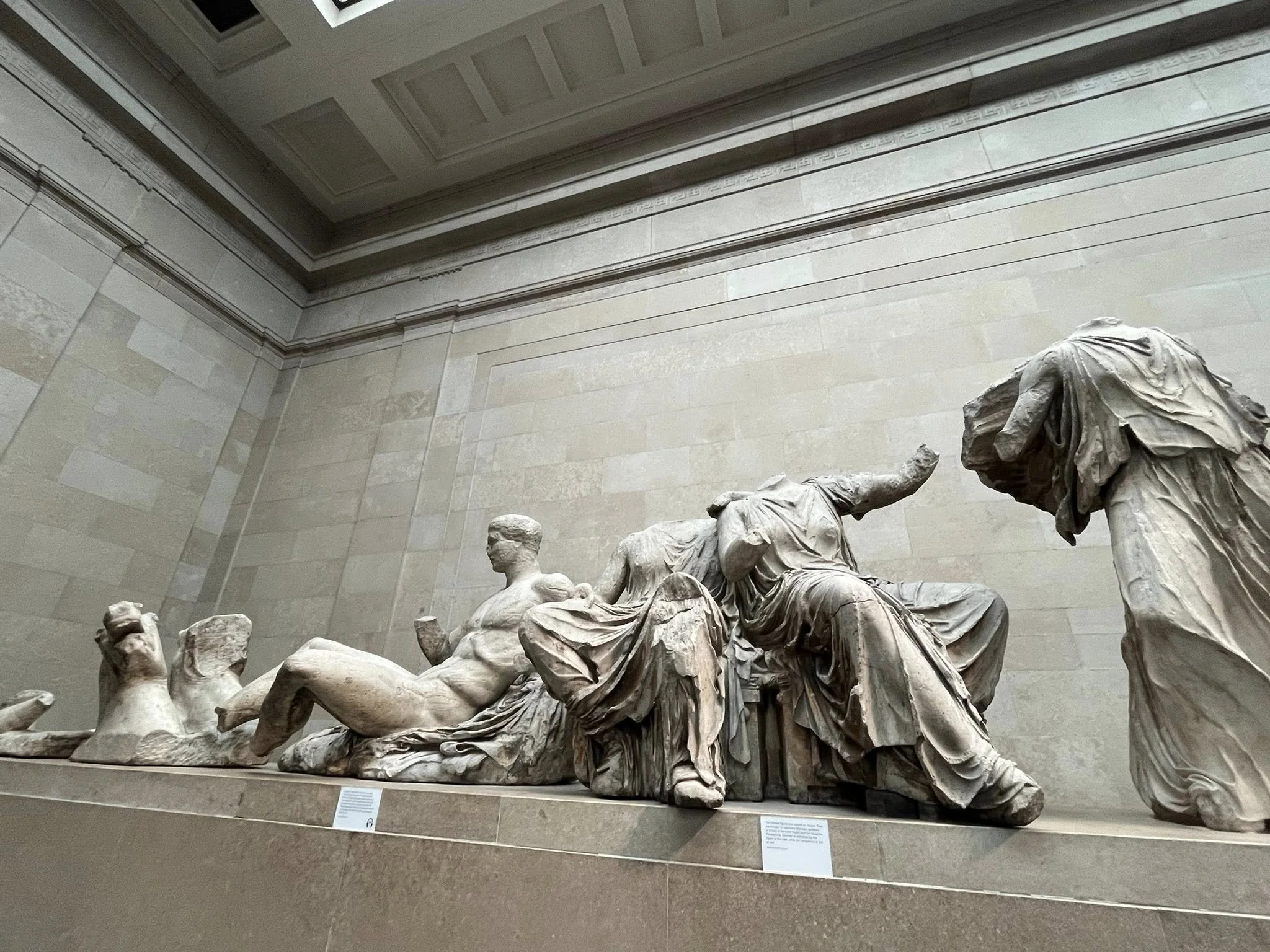
The masterfully crafted Parthenon Sculptures were some of our daughter’s favorite pieces.
Our daughter is fascinated by Greek mythology, so getting to see the Parthenon Sculptures was a huge treat for her.
These sculptures were once part of the Parthenon on the Acropolis in Athens, Greece.
While we would love to make it to Greece one day to see the full site, it made our Ancient Greece-loving daughter really happy to say she’s now seen part of the Parthenon.
The Moai From Easter Island (Room 24)
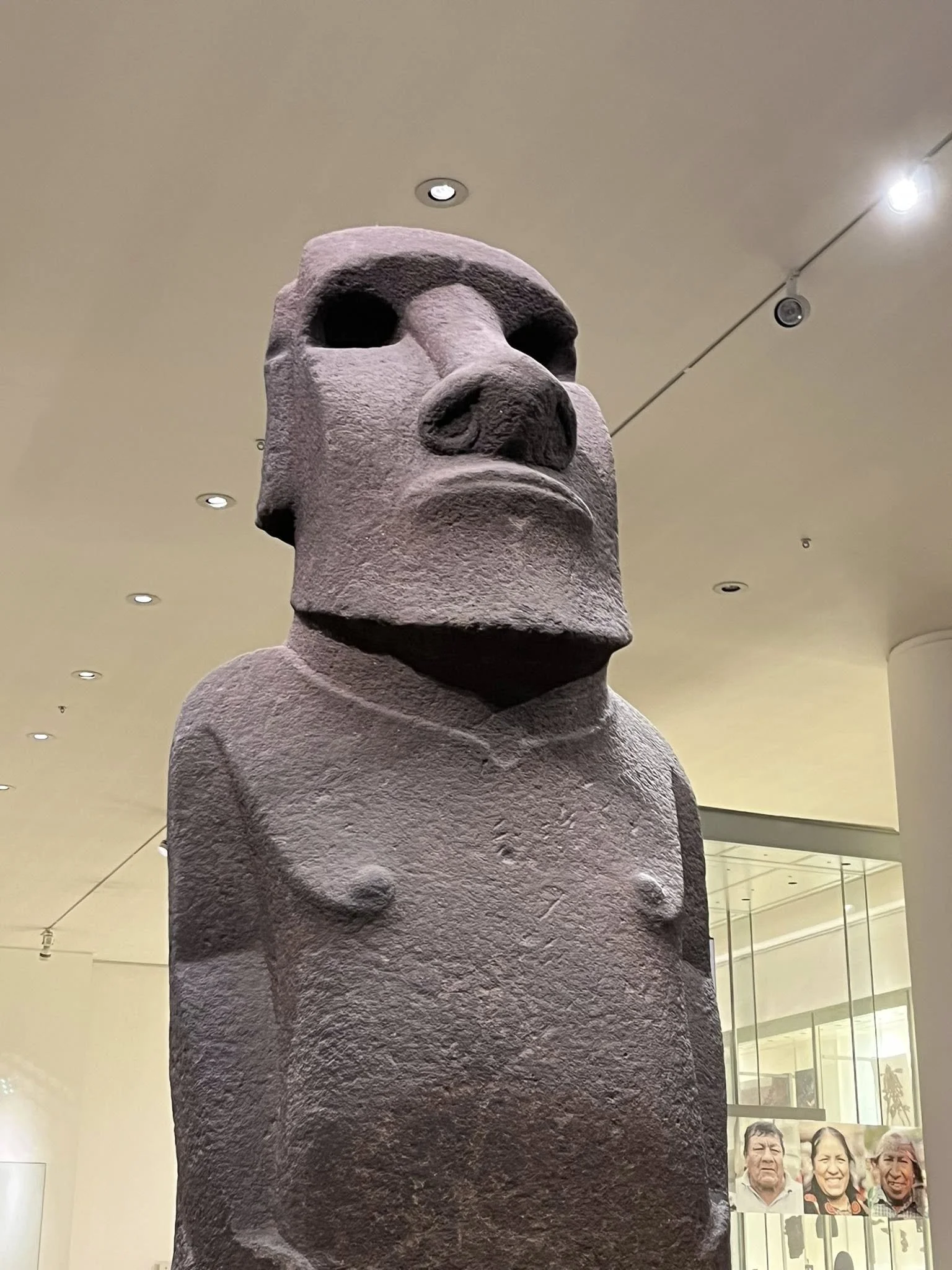
Our kids loved getting to see a Moai from Easter Island.
As we were preparing to travel to London, the kids were especially looking forward to seeing Hoa Hakananai'a, the stone statue from Rapa Nui, also known as Easter Island.
We had recently watched a documentary about Easter Island (and watched Night at the Museum - haha), so seeing one of the stones with their own eyes blew their minds.
We’re not sure if we’ll ever make it to Easter Island ourselves, but we’re thankful we were able to stand before a Moai and marvel at the mysteries that surround it.
The Cyrus Cylinder (Room 52)
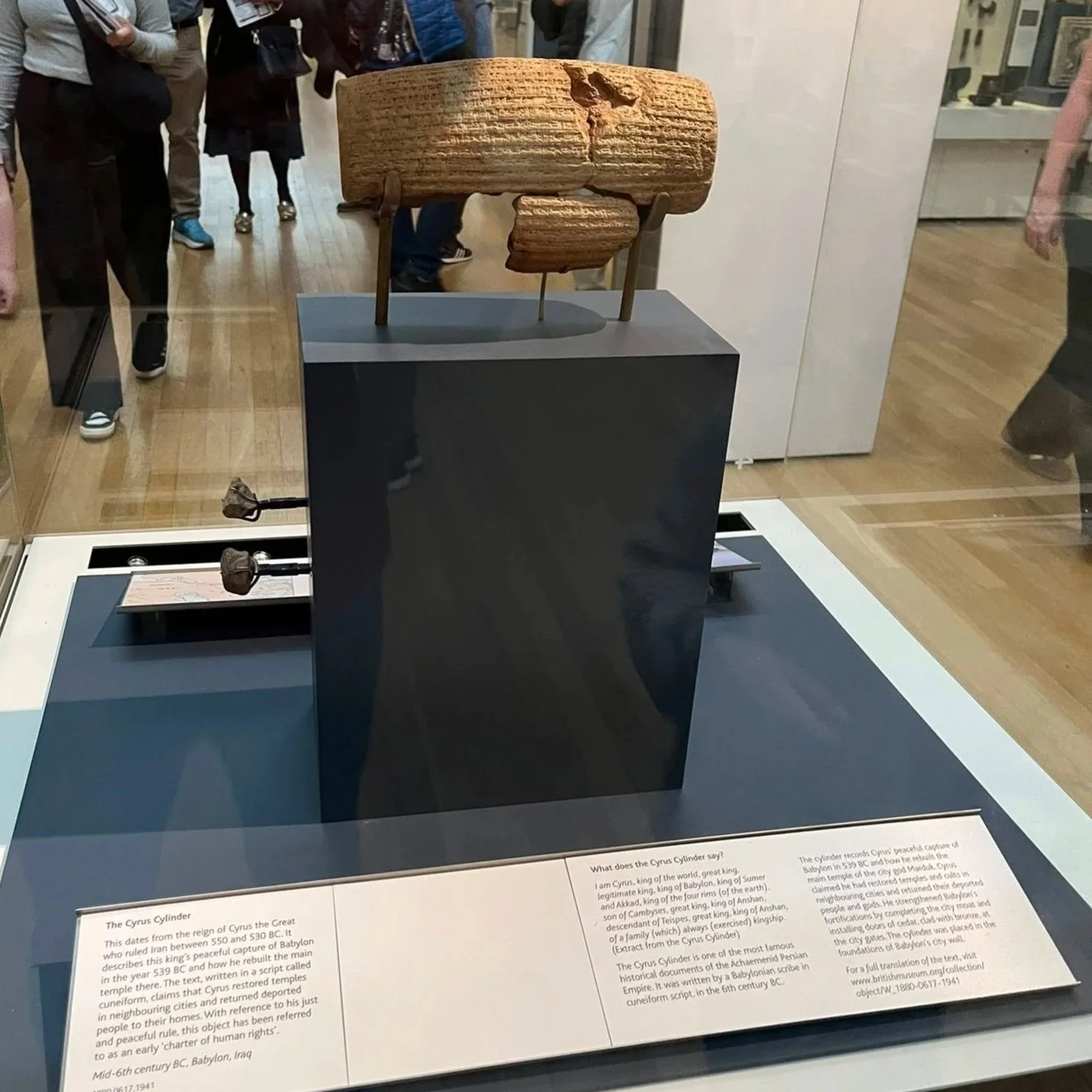
The Cyrus Cylinder was fascinating to learn about.
The Cyrus Cylinder is believed to display the first declaration of human rights.
The text is a proclamation from Cyrus the Great, a Persian king, following his conquest of Babylon.
Being of Persian descent myself, that was a special artifact to see in person.
Hands-On Ancient Stone Tools
Now, interactive experiences like this may be seasonal or change from time to time, but another stand-out highlight of our time at the British Museum was getting to hold ancient stone tools - one of which was 5,000 years old.
It’s one thing to see something of historical significance. That has incredible value in and of itself. But it’s another to be able to touch something that was actually held and used by someone in ancient times.
We had no idea there would be hands-on exhibits, so this was a wonderful surprise and helped make history come alive for the kids.
Other British Museum Highlights Worth Seeing
Honestly, all of the Egyptian galleries were fascinating. Getting to see actual hieroglyphics up close is something I’ll never forget. When I was little, I formed an “Egypt Club.” Not like an actual club - I may have been my only member. I just remember reading books about Egypt and dreaming of going there one day. This would have made elementary-aged me so unbelievably happy!
The kids were also captivated by the crystal skull, located near the moai from Easter Island. Again, we’d watched a brief YouTube video on the skulls before coming, which captured their imaginations.
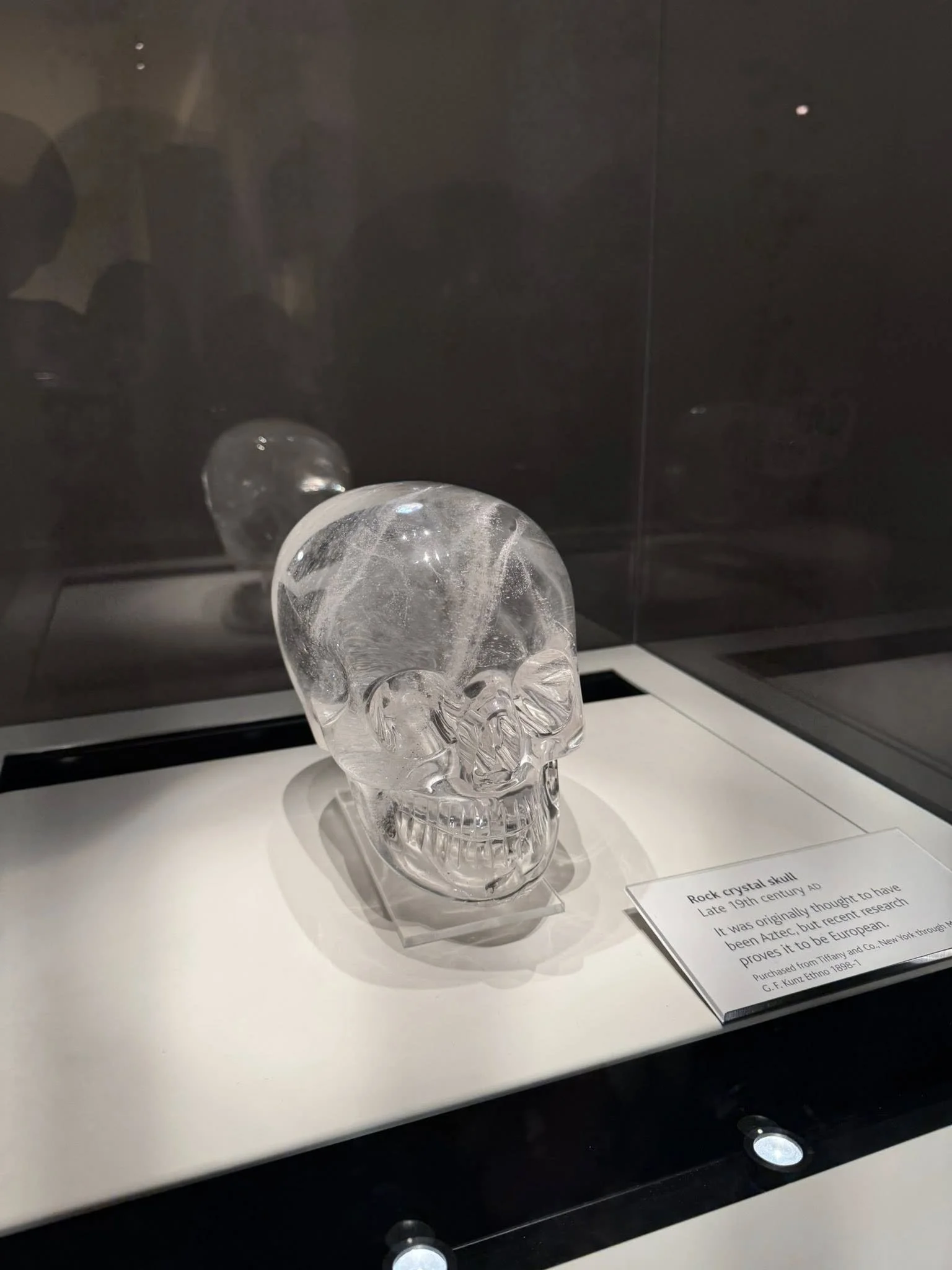
The Crystal Skull was a happy discovery on our way to see the Moai from Easter Island.
While we just saw it while navigating through the building, we also really enjoyed walking through the China and South Asia gallery. There were many beautiful artifacts there.
Visiting the British Museum With Kids
When bringing children to the British Museum, you should consider their ages and interests. A teenager who is fascinated by Ancient Greece may want to spend far more time perusing exhibits than a 4-year-old.
When visiting museums with younger kids, I suggest picking a handful of must-see exhibits. These would be the ones you’d deeply regret not seeing. Try to find a couple that might interest them, too. Even if they’re quite young, a lot of cartoons feature places from all around the world, like a mummy on Scooby Doo.
After making it to all your absolute must-sees, you can see how your kids are doing and judge whether they’re up for exploring more.
Final Thoughts
The British Museum is one of the most impressive museums in the entire world. If you get a chance to visit while in London, it’s absolutely worth visiting.
While you could easily spend days there, even if I never get the opportunity to return, I’m satisfied with everything we got to see. Viewing artifacts like the Rosetta Stone, Parthenon Sculptures, and a Moai is a memory I’ll treasure forever.
Looking for more help with planning your London trip?
See how we fit the British Museum into our complete 6-day London itinerary, including Westminster, Stonehenge, Windsor Castle, the Tower of London, the Harry Potter Studio Tour, and more.
Traveling with kids? Check out London with Kids: A Realistic Guide for First-Time Families, Where to Stay in London with Kids: Why We Loved South Bank, How Many Days to Spend in London with Kids, and our tween's favorite places to visit on a London trip.